
Before any drilling, cutting, or rewiring, our electricians confirm exactly where the power is coming from, not assume it. That one step prevents the two most common electrical call-outs we see: damaged ceilings from guesswork installations, and safety systems accidentally disabled during unrelated repairs.

Electrical maintenance in Dubai isn’t optional, heat, humidity, and constant AC load put more strain on wiring, connections, and panels than most properties see anywhere else. We provide scheduled electrical maintenance for residential and commercial properties, covering wiring condition checks, connection tightening, panel and breaker inspections, and load assessments designed to catch problems before they become faults.
For homes, this means periodic checks on sockets, switches, lighting circuits, and aging wiring, the kind of small issues that go unnoticed until a breaker starts tripping. For offices, retail units, and commercial buildings, it means a maintenance schedule built around minimizing downtime, since an unplanned electrical failure during business hours is far more costly than a routine inspection.
A ceiling fan that's noisy, slow, or won't start is rarely a fan problem on its own. It's usually the capacitor, the wiring connection, or the speed regulator. We diagnose which one it is before replacing anything.
Electrical installation covers any new wiring, fixtures, or circuits added to a property, not just replacing what's already there. Before any installation begins, our expert technicians map the existing electrical layout.
Most electrical repairs go wrong at the diagnosis stage, not the repair stage, parts get replaced before the actual cause is confirmed. Here’s the process that avoids that.
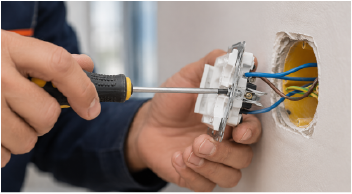
Installation, repair, and maintenance across residential and commercial properties covering wiring, lighting, chandeliers, ceiling fans, sockets, switches, circuit breakers, and distribution boards, along with emergency call-outs for urgent faults.
Yes, 24/7 Electrical services for situations that carry an active risk, burning smells, sparking, shocks, or sudden power loss. These are prioritized over scheduled visits since they involve fire or safety risk.
Usually an overloaded circuit, a short circuit, or a faulty appliance drawing excess current. The fix starts with identifying the affected circuit and testing its load before resetting or replacing the breaker.
Often a loose bulb or switch connection. If it’s happening across several rooms, the cause is more likely a loose connection at the distribution board rather than any single fixture.
Yes. The electrical source is confirmed before any drilling begins, with dedicated wiring added only if needed, avoiding the common mistake of assuming a cable is already in place.
Yes! Replacement for loose, dead, or faulty units, and a wiring check behind the socket if there’s any sign of sparking or heat, since that points to a deeper connection issue.
Every 3–5 years for most residential properties, or annually for commercial properties and older buildings, though a shorter interval is worth considering in high-humidity or heavy-load environments.
WhatsApp us